
Marketing followed a simple formula: create one message, broadcast it to as man \ people as possible and hope it Billboards, TV commercials, newspaper ads, and mass email campaigns all relied on the same assumption that a message could appeal to everyone.
Today, generic marketing is dying not just ineffective it’s actively ignored. Consumers are more informed, more selective, and more than ever before. As technology evolves and customer expectations rise, brands that rely on one sizefits all messaging are losing relevance, trust, and revenue.
So why exactly generic marketing is dying and what should businesses do instead? why generic marketing is dying
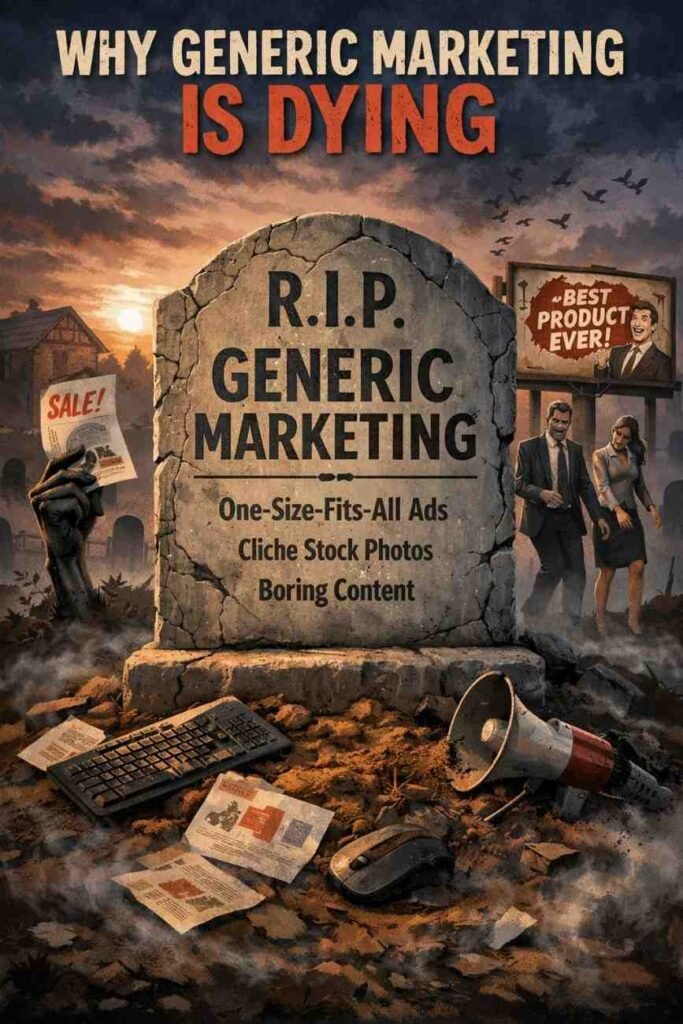
1. Consumers Overloaded With Content
The average person is exposed thousands of marketing messages every single day.
Generic marketing is dyingblends into this noise.
When a message doesn’t feel relevant or specific, the brain automatically filters it out. People scroll past ads without reading them, delete emails without opening them, and skip commercials the moment they appear.
Attention has become the most valuable currency in marketing, and generic messaging simply doesn’t earn it anymore . (generic marketing is dying )

2. Customers Expect Personalization (generic marketing is dying)
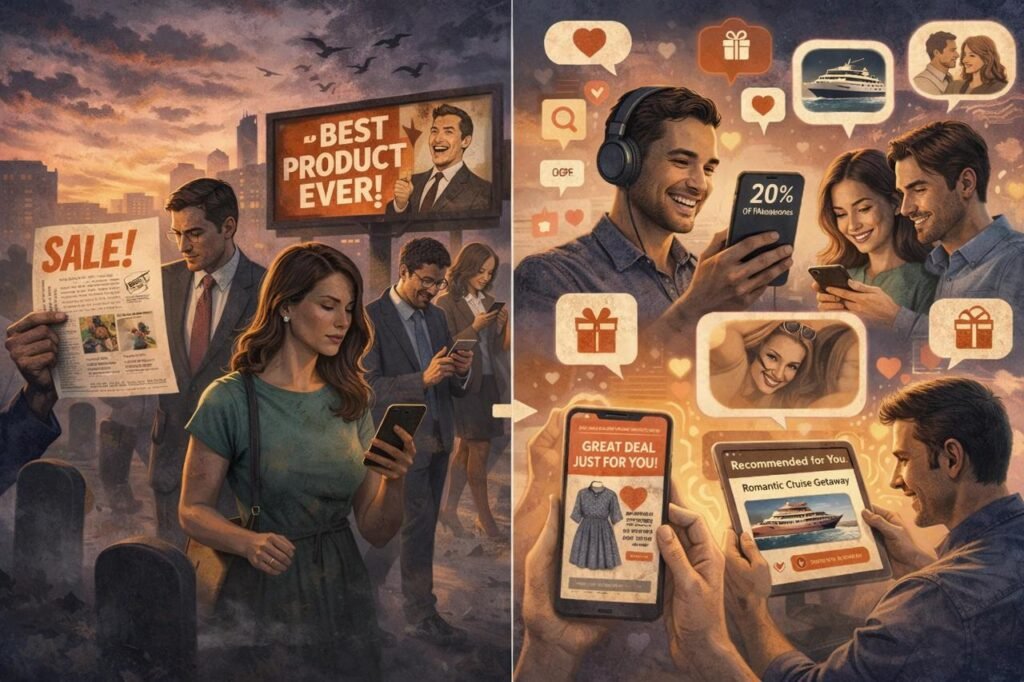
Modern consumers don’t just prefer personalization they expect it.
Streaming platforms recommend shows based on viewing history. E -commerce sites suggest products based on past purchases. Social media feeds are curated to individual interests. This level of personalization has become the norm, not a luxury.
When a brand sends a vague message like “Check out our amazing offers!” without considering who the customer is, what they need, or where they are in their journey, it feels
outdated and impersonal. Generic marketing is dying makes them feel like
just another number .
3. Trust in Traditional Advertising Is Declining(generic marketing is dying)
People no longer trust broad, polished marketing claims the way they once did. Statements like “Best in the market” or “Number one solution” sound empty without proof.
Consumers now rely more on:
- Reviews and testimonials
- Influencer recommendations
- Peer opinions
- User-generated content
Generic marketing is dying often avoids specificity, which makes it feel less credible. In contrast, targeted messaging that addresses real problems, real use cases, and real outcomes builds trust far more effectively .
4. Data Has Changed the Rules of Marketing
One of the biggest reasons generic marketing is dying is simple: there’s no longer an excuse
for it.
- Customer demographics
- Behavior patterns
- Purchase history
- Engagement metrics
brands can segment audiences and tailor messages with precision.
Continuing to use generic messaging in a data -rich environment signals either laziness or a lack of strategy.
Customers know brands have this data and they notice when its not being used thoughtfully.
5. Social Media Rewards importance
Social media platforms are reshaped marketing. Algorithms prioritize content that sparks engagement, conversation, and relevance.
Generic marketing is dying posts tend to:
- Get fewer likes
- Receive fewer comments
- Generate little sharing
As a result, they get shown to fewer people.
Highly targeted, relatable, and niche content performs far better. A message that speaks directly to a specific audienc even a smaller one will outperform a broad message aimed at everyone.
6. Buyers Are on Unique Journeys
Not every customer is ready to buy at the same time or for the same reason. Some are discovering a problem, others are comparing solutions, and some are ready to make a
decision.
Sending the same message to someone who’s just learning about your brand and someone who’s ready to purchase leads to missed opportunities.
Effective marketing aligns messaging
with the buyer’s stage in the journey, offering the right information at the ri ght time.
Generic messaging treats all prospects the same and that’s a costly mistake.
7. Niche Brands Are Outperforming Mass Brands
By speaking directly to a niche using their language, addressing their exact pain points, and reflecting their values these brands create stronger loyalty and higher conversion rates.
Generic marketing is dying , on the other hand, waters down messaging to avoid excluding anyone. In doing so, it fails to truly connect with anyone
What’s Replacing Generic Marketing?
As generic marketing fades, a more intentional approach is taking its place. The future of marketing is built on: 1. Audience Segmentation
Breaking your audience in meaningful groups based on behavior, needs, or preferences.
Using data and automation to deliver customized messages without losing efficiency.
- Value -Driven Content
Creating educational, entertaining, or problem -solving content instead of purely promotional messages.
- Authentic Storytelling
Sharing real stories, real experiences, and real results that resonate emotionally.
- Customer -Centric Strategy
Designing marketing is what the customer needs not what the brand wants say.
Consumers are smarter, selective, demanding. They expect brands understand them, respect their time, and deliver messages that actually matter.
This isn’t something fear it’s an opportunity.
Brands personalization, relevance, and authenticity will stand out in a crowded marketplace. Those that cling to generic messaging will continue to be ignored
In the age of infinite choices, the brands that win aren’t the loudest they’re the most relevant
The Cost of Sticking With Generic Marketing is dying
Beyond declining engagement, generic marketing comes with hidden costs that many
businesses overlook. When campaigns are broad unfocused, marketing budgets are wasted on audiences who were never good fit in the first place. This leads to higher acquisition costs, lower conversion rates, and disappointing returns on investment.
Instead of refining messaging based on insights, brands end up compensating by spending more more ads, more impressions, more promotions hoping volume will make up for lack of relevance. Over time, this approach becomes unsustainable, especially for small and mid – sized business competing against larger brands with pockets.
Targeted marketing, may reach fewer people, but it reaches the right people. The result is more meaningful interactions, better lead quality, and stronger long -term relationships.
Emotional Connection Matters More Than Ever
One of the biggest weaknesses of generic marketing is inability to connect emotionally.
Safe, neutral messaging curiosity, excitement, or trust. It avoids strong opinions
and clear positioning in an attempt to appeal everyone. But people don’t connect with neutral brands they connect with brands that stand for something.
Emotionally driven marketing that speaks real frustrations, desires, and aspirations performs significantly better. Whether it’s solving a specific pain point or aligning with shared values, marketing that feels human creates loyalty that generic campai gns simply cannot achieve.
In a competitive marketplace, emotional relevance is often the difference between being remembered and being forgotten.
The Role of Technology in the Shift
Advancements in marketing technology have accelerated decline of generic marketing is dying.
Tools powered by artificial intelligence, machine learning, and automation now allow brands to deliver personalized experiences across email, websites, ads, and social media
For example, two people can visit the same website see entirely different content based
on their location, behavior, or previous interactions. Email campaigns can dynamically adjust subject lines, offers, and messaging for each recipient. Ads can be to specific interests and intent signals.
As these tools become more accessible, consumers will grow even less tolerant of generic experiences. Personalization will no longer be a competitive advantage it will be a baseline expectation.
Future -Proofing Your Marketing Strategy
To stay relevant in a world where generic marketing is disappearing, brands must adopt a continuous learning. This means regularly analyzing customer data, testing new messaging, refining strategies based on real feedback.
Successful marketers focus less on broadcasting messages and building conversations. They listen to their audience, respond their needs, and adapt quickly changing behaviors.
The future belongs to brands that treat marketing as a relationship,
Closing Perspective
Generic marketing isn’t dying because it stopped working overnight it’s dying because audiences outgrew it.
As consumers demand relevance, authenticity, and value, marketing must evolve accordingly. Brands that embrace this change will not only survive building deeper connections and stronger loyalty in an increasing digital world.
marketing that speaks to everyone speaks Marketing that speaks to someone speaks volumes.